40 Murder Mystery Questions to Ask Suspects
Published June 14, 2026 · 3 min read
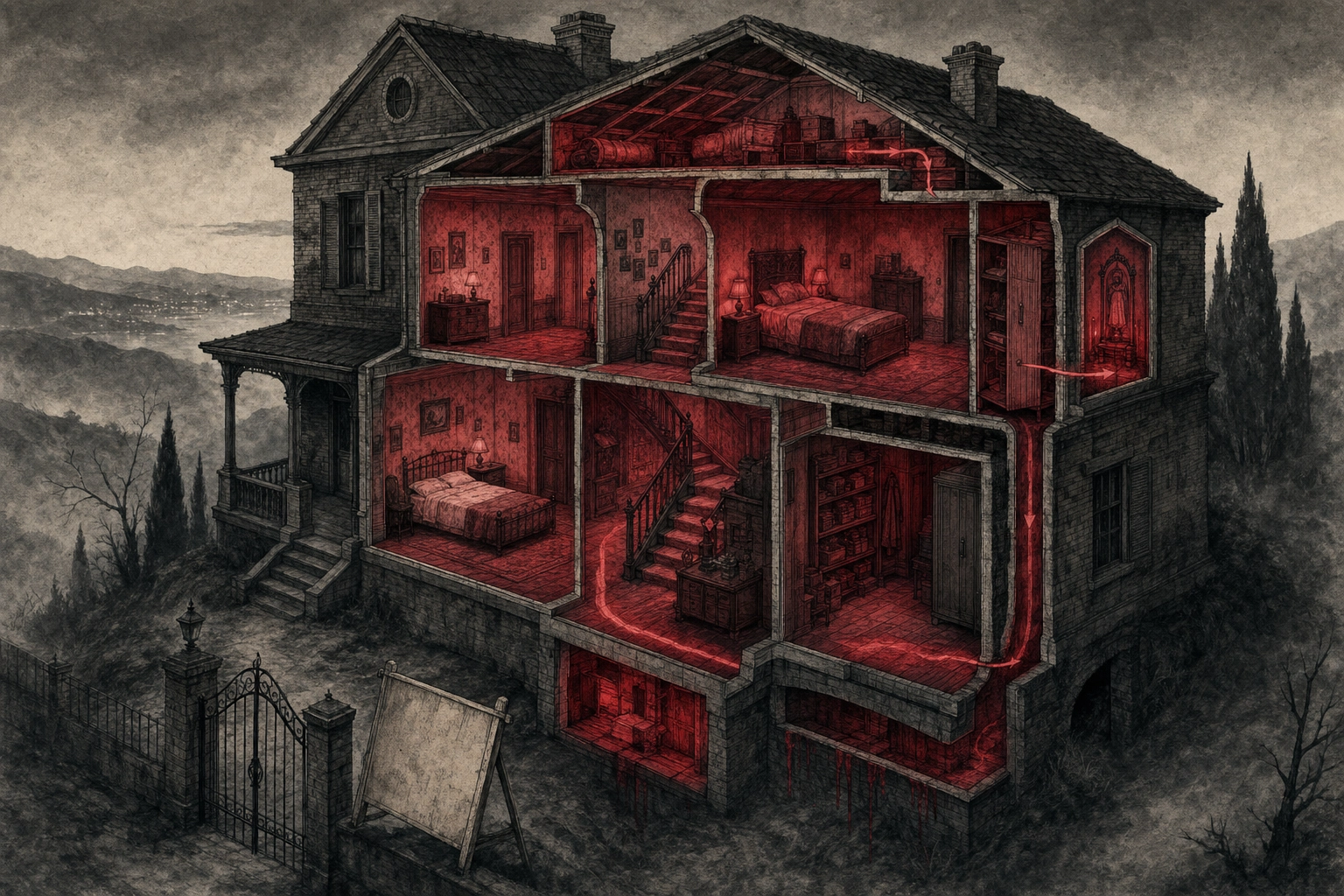
The fastest way to improve at a murder mystery is to ask sharper questions. New players often ask "Did you do it?" too early. Better detectives pressure time, access, motive, and contradiction until a suspect's story has nowhere clean to stand.
Use these prompts in any online mystery, especially AI suspect games where you can question characters in your own words.
The five best questions to ask first
If you only have one minute with a suspect, begin here:
- Where were you when the victim was last known to be alive?
- Who can independently confirm that?
- What was the last thing the victim said to you?
- What fact about tonight are you most reluctant to explain?
- What evidence would prove your account is true?
These questions establish time, corroboration, relationship, concealment, and a testable claim. Do not ask “Did you kill them?” first. A denial gives you almost nothing to verify.
Alibi questions
Start by fixing each suspect to a place and time:
- Where were you when the victim was last seen alive?
- Who can confirm that?
- When did you leave that room?
- What did you hear during that time?
- What object or detail proves you were there?
- Did anyone ask you to cover for them?
- Why should I trust your timeline over another suspect's?
- What part of your evening are you least certain about?
Motive questions
Motive is not proof, but it tells you where to push:
- What did the victim know about you?
- Who benefits from the victim's death?
- What argument did you have recently?
- What would change for you if the victim disappeared?
- Were you afraid of exposure, debt, inheritance, scandal, or revenge?
- Who else had the same reason to want the victim gone?
- What are you not telling me because it sounds worse than it is?
- What did the victim promise, threaten, or refuse?
Access questions
Many cases turn on who could reach the weapon, room, or document:
- Who had keys?
- Which doors were locked?
- Could anyone move between rooms without being seen?
- Who handled the weapon or suspicious object earlier?
- What room did you avoid, and why?
- Did you notice anything moved, missing, or cleaned?
- Who knew the victim's routine?
- Who had enough privacy to prepare the method?
Contradiction questions
After you find clues, return to the first statements:
- You said the study was empty, but we found a fresh glass there. Explain that.
- Why does your timeline overlap with another suspect's?
- Earlier you said you were alone. Why did another witness place you nearby?
- What did you mean by that vague answer?
- Which part of your story would the victim deny?
- If you are innocent, who is lying?
- What changed after we searched the room?
- Why did you omit this detail the first time?
Final accusation prep
Before submitting your theory, ask yourself:
- Can I name the killer, method, motive, and opportunity?
- Can I explain the timeline without gaps?
- Can I account for the strongest red herring?
- Can I cite physical evidence, not just suspicious behavior?
- Does my theory require a coincidence?
- Would the suspect's lie make sense if they were innocent?
- What single clue would disprove my theory?
- Have I questioned every suspect after finding the key clue?
How to use the questions without wasting turns
Use a four-pass interview instead of firing prompts at random:
- Open: let the suspect describe events in their own order.
- Pin: lock down times, rooms, people, and objects.
- Test: compare the answer with physical evidence and another witness.
- Return: show the contradiction and ask for a corrected account.
Write the exact answer beside the clue that tests it. “Morgan seemed nervous” is an impression; “Morgan said he left at 10:10, but the door log records 10:34” is evidence.
Practice in a live case
Try these questions in The Womb House if you want an architectural puzzle, or Snowbound Pursuit if you want a timeline-heavy interrogation. For a broader strategy checklist, read how to solve a murder mystery.
Frequently asked questions
What should I ask a suspect first?
Ask where they were during the critical window and who can confirm it. This creates a claim you can test against another person, a timestamp, or physical evidence.
Should I tell a suspect what evidence I found?
Not immediately. Get their unprompted version first, then reveal one fact at a time. If you show every clue before they commit to a story, you make it easier for them to explain around the evidence.
How do I know when a suspect is lying?
Nervous behavior alone is not proof. Look for an answer that changes, conflicts with independent evidence, avoids a specific time or place, or requires an unlikely coincidence. Then ask a narrow follow-up that can produce a verifiable detail.
Keep this page beside your case, choose one question that tests the weakest part of the current theory, and start a suspect interview.