Halloween Murder Mystery Party: The Host's Playbook (2026)
Published August 14, 2026 · 7 min read
Halloween is the one night of the year when a murder mystery party needs no explanation. Everyone is already in costume, already in a house with the lights down, already primed to be lied to. You are not selling the concept — you're just running it.
Which means the entire job is logistics. This playbook covers the six theme structures that work, when to send what, how to cast people so nobody freezes, and a three-hour run sheet you can print. There's also an honest section at the end on skipping the whole production, because for a lot of hosts that's the right answer.
First, pick your format — this decides everything else
Three formats fit Halloween, and choosing between them determines your prep, your guest list, and whether you get to enjoy your own party.
The scripted dinner mystery. Everyone gets a character, a costume brief, and secrets. Play unfolds across courses. Best for 6–12 guests who like performing. Prep: high. Payoff: the memorable one.
The mingle mystery. Everyone gets a light character card and circulates; no fixed seating, no scripted rounds. Scales to 20–40. Best for a party where people are also drinking, eating and arriving late. Prep: medium. Payoff: nobody is trapped in a chair for three hours.
The investigation night. No character play at all. Guests are detectives working one case together — evidence, suspects, a solution. Best for a group where a third of the guests hate acting. Prep: low to none. Payoff: the deduction is real, and shy guests participate fully.
The common host mistake is picking the scripted dinner because it's the iconic version, then discovering that four of your ten guests would rather be shot than improvise a Transylvanian accent. Cast the format to the people you actually invited.
Six Halloween themes that hold up
Skip "haunted house, generally." A theme works when it explains why these people are trapped together — that's the closed circle every mystery needs, and Halloween gives you unusually good excuses for one.
1. The séance that went wrong
Eight guests, one medium, one table, and the lights out for ninety seconds. When they come up, someone is dead. Everyone was holding hands — supposedly.
Why it works: it builds an impossible crime into the premise, and the "we were all touching" alibi structure is a beautiful thing to break. Costume brief is easy (1920s spiritualist). It also gives you a natural reason to control the lighting.
2. The reading of the will, at midnight
A dead relative's estate, an eccentric clause, and heirs who must all be in the house until dawn. Then the executor dies.
Why it works: motive is pre-installed for every character, so even guests who don't improvise well have something to want. Gothic costume, minimal props.
3. The masquerade
Everyone is masked. The murder happens during the unmasking. Identity is the puzzle.
Why it works: it's the only theme where costume is a mechanic. Guests can be told to keep their mask on until a specific moment, and the question "who was that in the crow mask at eleven?" becomes real evidence. Great for larger, mingle-format parties.
4. The final night of the film shoot
A horror movie wrapping in a remote location. The lead actor is found dead in a scene they weren't scheduled to be in.
Why it works: it licenses stage blood, props, and camp performance without anyone having to be genuinely scary, and modern-dress costume means low guest effort. Good for a crowd that would find gothic earnestness embarrassing.
5. The village that does this every year
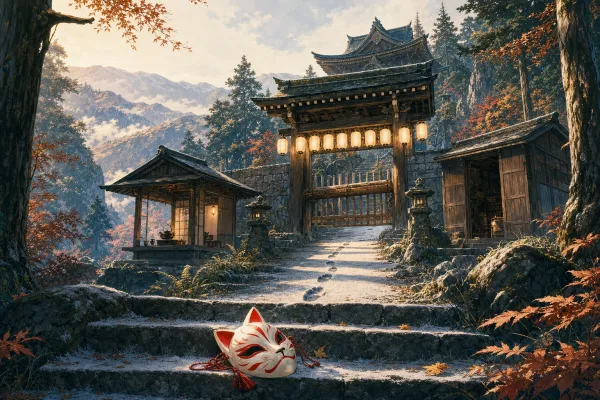
A folk-horror premise: an annual rite, a mask, a bonfire, a rule everyone in the village knows and nobody explains to the outsider. The outsider dies.
Why it works: it produces the best atmosphere of any theme on this list with the cheapest decoration — corn, candles, rope, one mask. It suits a group who like their horror unsettling rather than gory.
6. The lock-in
An office Halloween party, a bar after hours, a hotel with a storm outside. Ordinary people, ordinary clothes, one exit.
Why it works: zero costume pressure, which massively increases attendance among the friends who "don't really do Halloween." Every other theme on this list loses two guests to costume anxiety; this one loses none.
For twenty more theme ideas that also work outside October, see our murder mystery party themes list.
The four-week countdown
Working backwards from 31 October. Compress it if you're reading this late — the only genuinely date-sensitive item is the character brief.
Four weeks out — lock the guest list and the format. Get the headcount before you choose a kit or write a script, because character counts are rigid and a scripted mystery that needs eight breaks at six. Ask about dietary needs now; you'll be too busy later.
Three weeks out — send invitations with the character assignment. This is the one thing that must not be late. Guests need time to find a costume and read their material, and every host who sends characters the week before ends up with four people who didn't read them. Include: their character name, a one-paragraph brief, a costume suggestion at three effort levels ("minimum: a red scarf"), the start time, and a clear note about how much improvisation is expected.
Two weeks out — build the evidence. Whatever physical props your case needs: letters, a torn ticket, a photograph, a bill, a chemist's receipt. Age paper with cold tea and a low oven if you're feeling committed. Decide where each item will be found and by whom.
One week out — write the run sheet and confirm. Print your timeline (below). Send a friendly "you're playing X, here's your one-line reminder" message; expect two people to have lost their brief entirely.
Day of — set the room, not the whole house. Focus your effort on the one space where the reveal happens. Nobody remembers the hall.
Casting: match the role to the person
The difference between a party that flies and one that dies is almost entirely casting. Assign roles to personalities, not at random.
- The performer — give them the loudest character with the biggest secret. They'll drive the energy for everyone else.
- The quiet one — give them a character who knows something rather than one who must do something. Being the person everyone comes to question is far more comfortable than being the person who must hold the floor.
- The organiser — make them your co-host or the detective. They'll help you run the night and enjoy it more for having a job.
- The one who'll be late — give them a character who arrives late in the story. This is the single most useful hosting trick on this page.
- The couple who always sit together — split them across factions. They know each other's tells and will short-circuit the whole game if they're allied.
- You, the host — take a small role, or none. Hosting and playing a major character simultaneously does not work; something will burn, someone will need the bathroom key, and you'll miss your own cue.
Never assign the killer to someone who hates being the centre of attention. The reveal is a spotlight moment, and it should land on someone who'll enjoy it.
The three-hour run sheet
Adjust for group size; the shape holds. Times are elapsed, not clock.
| Time | What happens | Host's job |
|---|---|---|
| 0:00–0:30 | Arrivals, drinks, costume admiration | Hand out character packs and name cards. Do not start the story. |
| 0:30–0:45 | Opening: set the scene, introduce the world | Read the premise aloud. Establish the rule that nobody may lie about where they were, only about why. |
| 0:45–1:00 | Character introductions | One sentence each, going round. Keep it moving — this is where a party dies if you let people monologue. |
| 1:00–1:15 | The murder | Kill the lights, make a noise, reveal the body. Announce the closed circle: nobody leaves. |
| 1:15–2:00 | Round one: free investigation | Release the first evidence. Circulate. Nudge anyone standing alone toward a suspect who has something for them. |
| 2:00–2:15 | Break: food, drinks, regrouping | Release the second evidence during the break — it feels like a discovery rather than a handout. |
| 2:15–2:50 | Round two: accusations form | Push toward commitment. Ask people directly who they suspect and why. |
| 2:50–3:00 | Written accusations, then the reveal | Everyone writes killer + method + motive. Score. Reveal. Let the killer explain themselves. |
Two rules that save the night. First, make everyone write their accusation before the reveal — verbal guessing collapses into whoever is loudest, and writing forces everyone to commit. Second, score the reasoning, not just the name: two points for the killer, three for the method. Otherwise the person who guessed the least likely suspect at random wins, and nobody feels clever.
Atmosphere: five things that actually matter
Decoration budgets get spent in the wrong places. In rough order of effect per pound:
- Light. Everything. Overhead lights off, lamps and candles on, and one brighter pool of light where evidence gets examined. A room lit from below reads as sinister at zero cost.
- Sound. A low ambient bed — wind, rain, distant strings — under the conversation. Not a playlist with songs; lyrics compete with dialogue and make people talk louder.
- One arresting object. A single well-chosen prop in the centre of the room does more than fifty pounds of plastic bats. A covered mirror. A chair with a rope on it. A place setting for someone who isn't there.
- Temperature and seating. Prosaic, and it's what people actually remember. Too hot and everyone drifts to the garden; too few chairs and your quiet guests stand by the wall all night.
- A dead phone drawer. Optional but transformative. A basket by the door, phones in it, and the atmosphere holds for three hours instead of collapsing at the first lull.
Food should be things people can eat standing up while accusing each other. A sit-down meal locks conversation into whoever you're next to; grazing food keeps the room mixing, which is what an investigation needs.
Running it remotely
If your group is scattered, the séance and the lock-in convert best — both are premises where "everyone is a face in a dark room" is atmospheric rather than a compromise.
What changes:
- Halve your character count. Cross-talk is impossible on video, so eight is a hard ceiling and six is better.
- Use breakout rooms as the private-conversation mechanic. This is genuinely superior to in-person, where two people whispering in the kitchen is awkward. Schedule three five-minute breakout rounds.
- Put evidence in a shared folder, released on a timer, rather than handing out documents.
- Appoint a note-taker on a shared screen. Remote groups lose track of the timeline much faster than in-person ones.
Our Zoom and Discord setup guide covers the technical side, and the online dinner party guide has a full remote run sheet.
The no-prep version
An honest note, because a lot of hosts read all of the above and quietly decide to order pizza instead.
You do not have to run a scripted party to have a murder mystery Halloween. The investigation-night format needs no characters, no costume enforcement, and no writing: you put one case on a screen, and the room solves it together. Someone reads the briefing aloud, someone else drives the keyboard, and everybody argues.
This works far better than it sounds, for a specific reason — in a scripted party, half the room is performing and half is watching. In a shared investigation, everyone is doing the same thing at the same time, which is arguing about whether the housekeeper's timeline holds up.
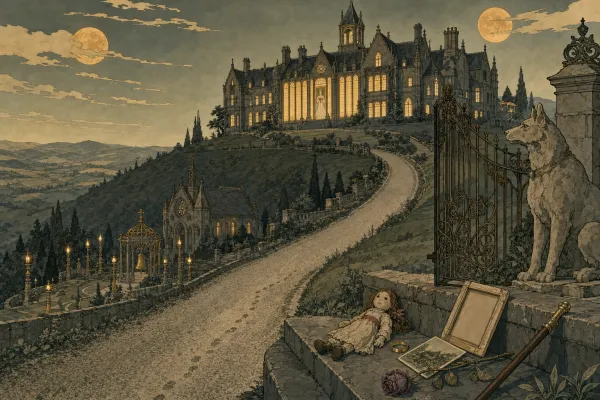
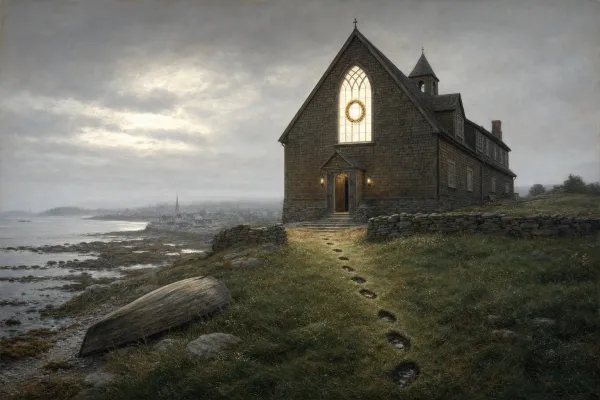
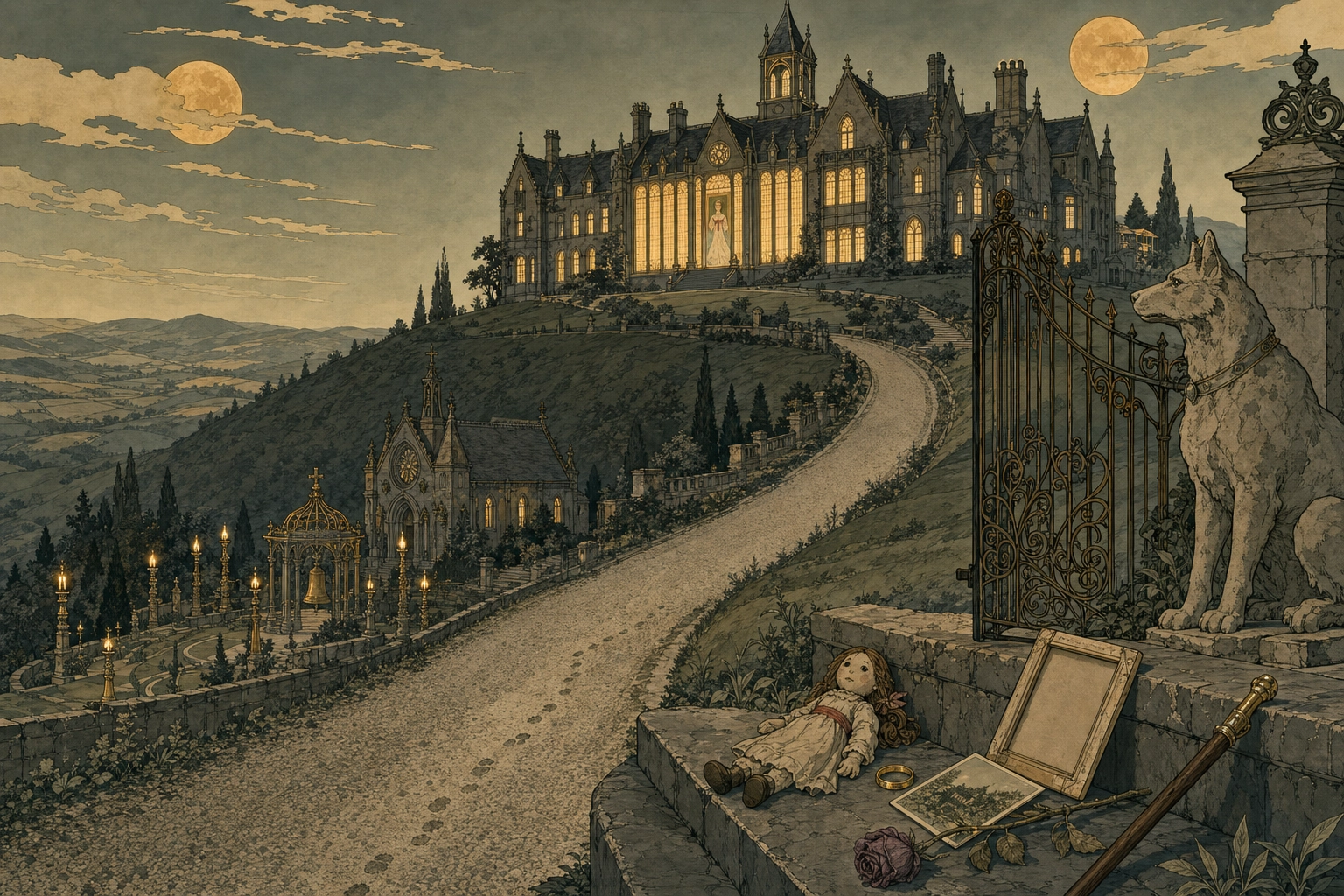
If that's your evening, pick a case with atmosphere to match the night. Black Sheep Manor (a sky with two moons, and both are watching), Choir of Plenty (ten stones, ten doors, nine nights) and Sweet Home (stolen names and a memory-eating fog) are the ones built for October. Browse all the cases and read the taglines out loud — the room will choose in about ninety seconds.
You can also run the hybrid: costumes and drinks and a decorated room, with a shared case instead of a script. You get the whole atmosphere and none of the four-week countdown.
Frequently asked questions
How many people do I need for a Halloween murder mystery party?
Six to twelve for a scripted dinner mystery. Below six the suspect pool is too small to be interesting; above twelve, guests stop getting airtime. Mingle formats work up to about thirty, and a shared investigation night works with any number, including two. For bigger crowds see murder mystery games for large groups.
How scary should it be?
Match the group, and decide before you invite. "Spooky" (candles, gothic, a mystery) and "horror" (jump scares, gore, genuine dread) attract different guests, and a mismatch is the most common way a Halloween party goes wrong. Say which one it is in the invitation.
How long does a Halloween murder mystery party take?
Three hours end to end, of which about ninety minutes is active play. Under two hours and the investigation doesn't have room to develop; over three and a half and people start checking their phones regardless of how good it is.
Can kids or teenagers join?
Teenagers, yes — with a case built for them. Younger children, run a separate lighter version rather than diluting the adult one. Our kids' detective party guide covers age-appropriate versions, and mystery games for teens has classroom-friendly formats.
What if someone drops out on the day?
This is why you keep a "minor character" list. Have two roles you can delete without breaking the mystery, and know in advance which they are — the killer, the victim and the two people with the crucial evidence are never on that list. If you're running an investigation night instead, a dropout costs you nothing at all.